Products
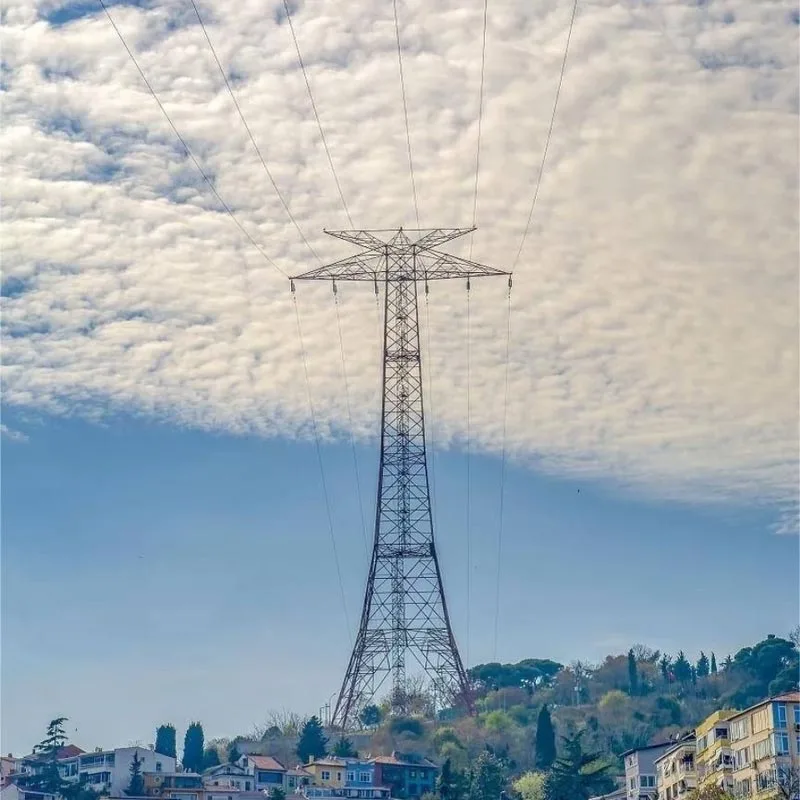
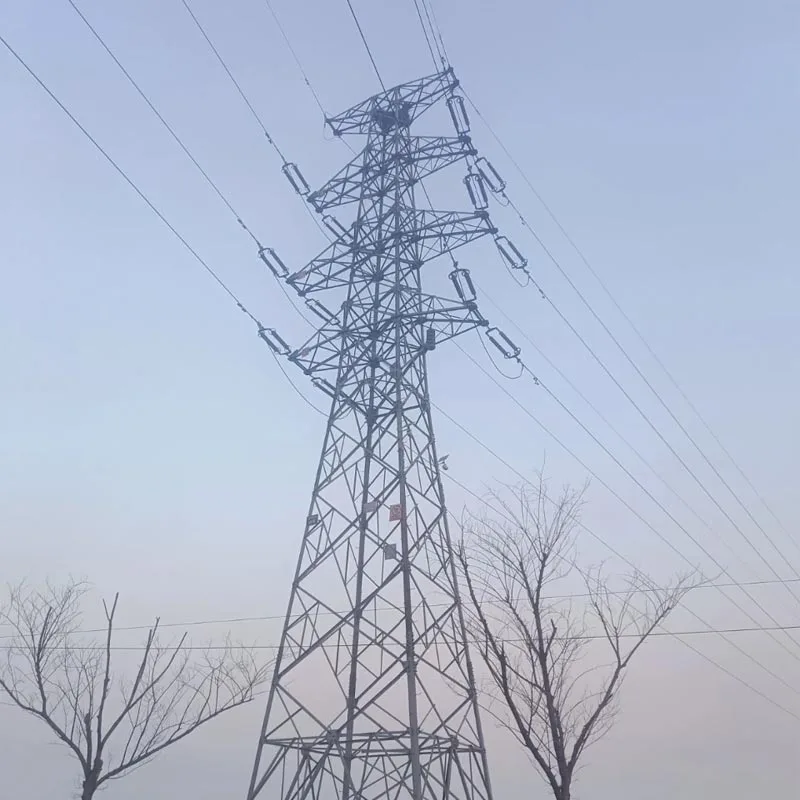
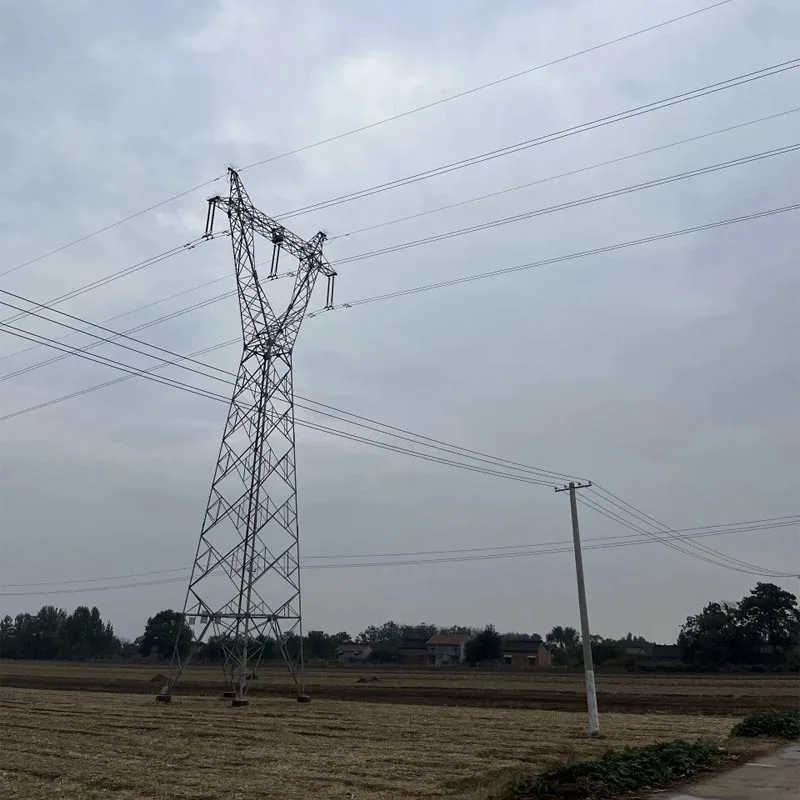


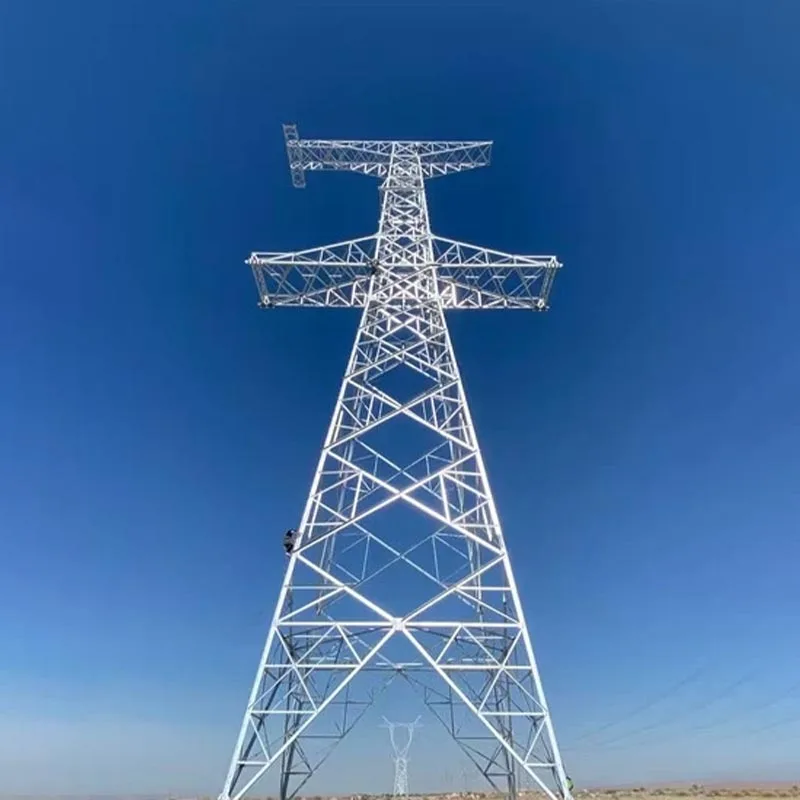
220kV Double Circuit Lattice Steel Tower
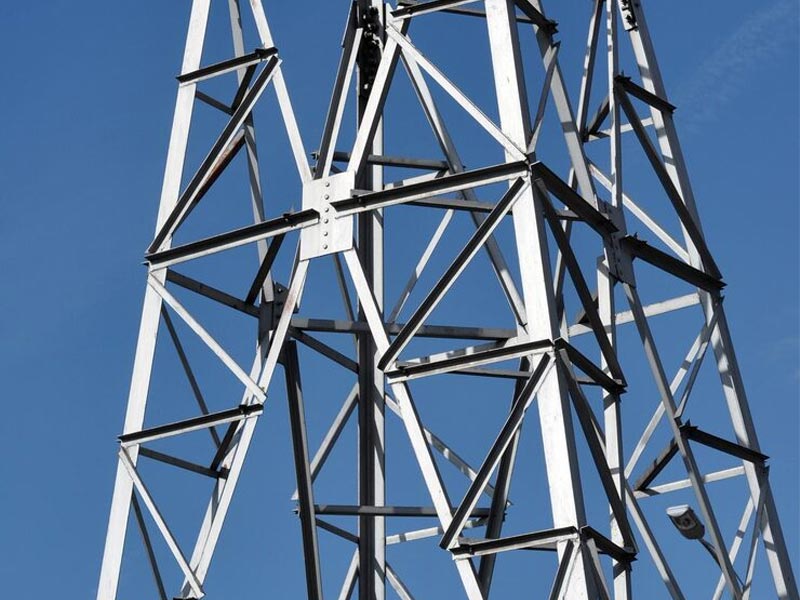
The 220kV Double Circuit Lattice Steel Tower is a core high-voltage power transmission structure engineered for long-distance, high-capacity grid operation. Adopting high-strength Q420/Q460 steel and hot-dip galvanization with an 85μm zinc coating, it features a robust lattice structure, supporting dual-circuit power transmission with a 50-year design lifespan and excellent resistance to wind, corrosion and extreme weather.
Backed by mature manufacturing systems, we boast an annual production capacity of 50,000 tons, with standardized procedures including precision cutting, robotic welding, integral shaping and strict surface treatment to ensure structural uniformity. For quality assurance, all products pass authoritative mechanical performance and wind resistance tests, with verified stress ratios and wind displacement complying with ASCE and national power standards. It holds ISO quality management system certifications and complete third-party test report
This tower has been widely applied in domestic and overseas key power grid projects, including the Indonesia Nusantara 220kV grid expansion project. It delivers stable structural performance, convenient on-site assembly and reliable operational safety, earning consistent recognition for high adaptability and engineering durability in diverse complex environments.
Application Scenarios of 220kV Double Circuit Lattice Steel Tower

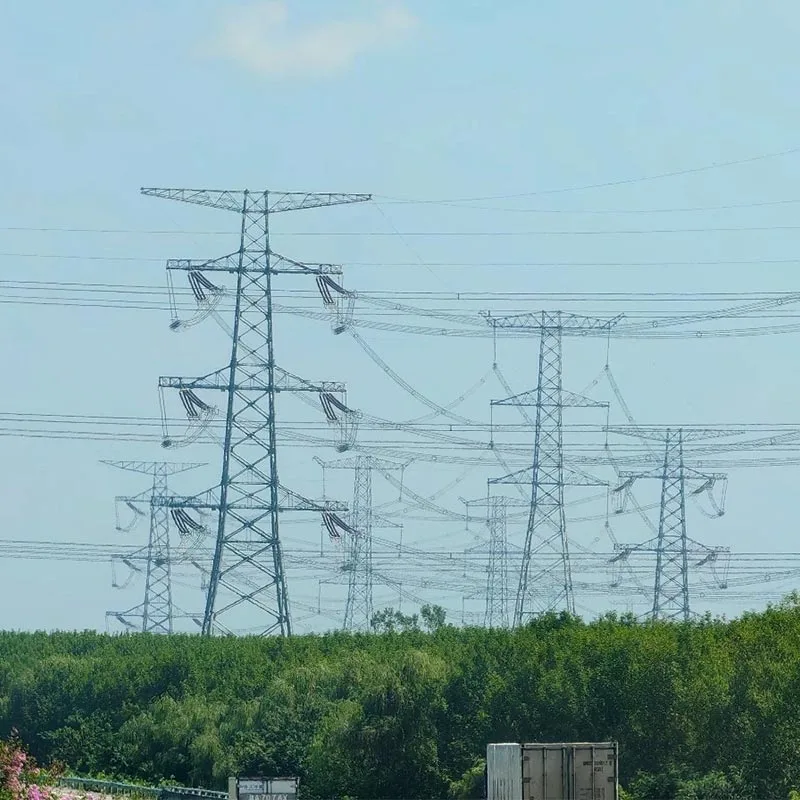
The 220kV double circuit lattice steel tower supports two independent 220kV transmission circuits on a single tower frame. Primarily adopted in land-limited regions, it greatly narrows transmission corridors and cuts land acquisition costs compared with two separate single-circuit lines.
It is widely used for urban incoming and outgoing power channels, connecting suburban 220kV substations in densely populated zones where new line corridors are hard to obtain. The tower suits mountainous and hilly terrain by reducing foundation works and ecological destruction. It is also preferred for crossings over rivers, highways and railways, simplifying crossing arrangements and minimizing disturbance to transportation and navigation.
Common applications include power supply lines for industrial load centres and outgoing transmission circuits of wind and solar power bases. However, attention should be paid to its drawbacks: heavier tower loads, higher risk of simultaneous failure of both circuits under tower damage, as well as stricter requirements for lightning protection and electromagnetic clearance design.
Standard Routine Maintenance Guidelines for 220kV Double Circuit Lattice Steel Tower

Regular maintenance ensures structural safety and stable power supply of 220kV double circuit lattice steel towers. Routine visual inspections shall be conducted quarterly, with comprehensive detailed inspections arranged annually.
Inspect tower main bodies, angle steel components and connection bolts for corrosion, deformation, cracks and loose fasteners. Check anti-corrosion coatings and hot-dip galvanized surfaces; carry out timely touch-up painting where galvanization peels off. Verify earthing devices, ensuring intact grounding conductors and qualified grounding resistance.
Monitor tower foundations for settlement, cracks, water erosion and slope instability. Inspect insulator strings, fittings and jumper connections for damage, pollution and abnormal heating. Remove floating objects, weeds and construction debris around tower sites.
Record all defects and implement classified rectification. Priority handling is required for severe risks such as structural distortion and broken fittings. After extreme weather including strong winds, thunderstorms and icing, special patrol inspections must be organised immediately.
Differences & Importance: 220kV Double Circuit Lattice Tower vs 500kV Lattice Steel Tower

Key Differences
1.Voltage & Clearance: The 220kV double circuit tower carries two 220kV circuits on one structure with smaller phase-to-phase and ground clearances. The 500kV tower operates at extra-high voltage and requires far larger electrical clearances to avoid air breakdown.
2.Tower Structure & Size: 220kV double circuit towers are relatively compact. Most 500kV towers are taller, heavier, with bigger cross arms and stronger foundations to withstand larger wind loads and conductor tension.
3.Circuit Layout: The 220kV type commonly arranges two circuits on a single tower to save corridors. Standard 500kV lattice towers are mostly single circuit due to strict electromagnetic limits; double-circuit 500kV towers are less frequently adopted.
4.Transmission Capacity: A 500kV line delivers much larger power transmission capacity for long-distance bulk power transport. 220kV double circuit lines mainly undertake regional power distribution and local load supply.
Importance
220kV double circuit towers optimise land use for suburban and urban power networks, improving power supply reliability within regional grids. 500kV lattice towers form the backbone of the main grid, enabling long-distance energy transmission between power bases and load centres. Proper tower selection balances construction cost, land resources, transmission scale and grid security.
Anbang Advantages of 220kV Double Circuit Lattice Steel Tower

(around 200 words, formal export technical version) Anbang’s 220kV Double Circuit Lattice Steel Tower delivers reliable, cost-effective overhead transmission solutions for global power grids. Adopting high-strength Q355/Q420 angle steel and strict hot-dip galvanisation complying with ISO 1461, the tower achieves superior anti-corrosion performance and a 50-year design service life, suitable for coastal, mountainous and inland complex terrain.
Supported by independent engineering teams, Anbang provides customised structural design following IEC and GB standards to meet varied wind speed, ice coating and crossing requirements. Optimised lattice layout guarantees stable mechanical load distribution while controlling overall steel consumption, cutting project investment.
All components are CNC processed with precise hole matching for easy on-site assembly. Complete pre-delivery inspection ensures dimensional accuracy and bolt fastening quality. Anbang offers full one-stop services including drawing optimisation, fabrication, packaging and technical guidance. Our towers effectively save transmission corridor width for urban and renewable power projects, winning consistent recognition from EPC contractors and power operators worldwide.
FAQs — 220kV Double Circuit Lattice Steel Tower

Suitable for catalog, quotation document & client communicatio
Q1: What is a 220kV double circuit lattice steel tower?
A: It is an overhead transmission tower carrying two independent 220kV power circuits on one lattice steel structure. It helps save land corridor compared with two separate single-circuit tower lines.
Q2: Which standards do your towers comply with?
A: We follow GB national standards, IEC specifications. We can adjust design according to client requirements for wind load, ice thickness and regional environment.
Q3: What steel material and anti-corrosion treatment do you adopt?
A: Main material Q355B / Q420B angle steel. All components adopt hot-dip galvanization (ISO 1461) to ensure long anti-corrosion lifespan.
Q4: What is the design service life?
A: Standard design service life reaches 50 years under normal maintenance conditions.
Q5: What terrain scenarios are these towers suitable for?
A: Suitable for suburbs, mountain areas, river crossings, highway/railway crossings, wind farm and solar power outgoing lines with limited corridor width.
Q6: Can you provide customized tower design?
A: Yes. Our engineering team can optimize tower model, height, cross-arm layout based on route survey data, wind speed, icing condition and crossing demands.
Q7: What is your production inspection process?
A: CNC cutting, drilling, assembling trial fitting before galvanizing. Dimension inspection, galvanizing thickness test and loading inspection will be carried out before shipment.
Q8: What are the main risks needing attention for double circuit tower operation?
A: Once the tower is damaged, both circuits may be interrupted. Regular maintenance on bolt tightness, anti-corrosion coating, foundation settlement and grounding resistance is required.
Hot Tags:
Send Inquiry
Contact Info
-
Address
No. 46 Shandong Road, Beiguan Industrial Park, Jiaobei Subdistrict, Jiaozhou City, Qingdao, Shandong Province, China
-
Tel
-
Email
Anbang is a professional manufacturer and supplier in China. Our factory provides steel pipe tower, signal tower, single arm traffic pole, etc. If you are interested in our products, you can inquire now, and we will get back to you promptly.
Related Products
News Recommendations