Products
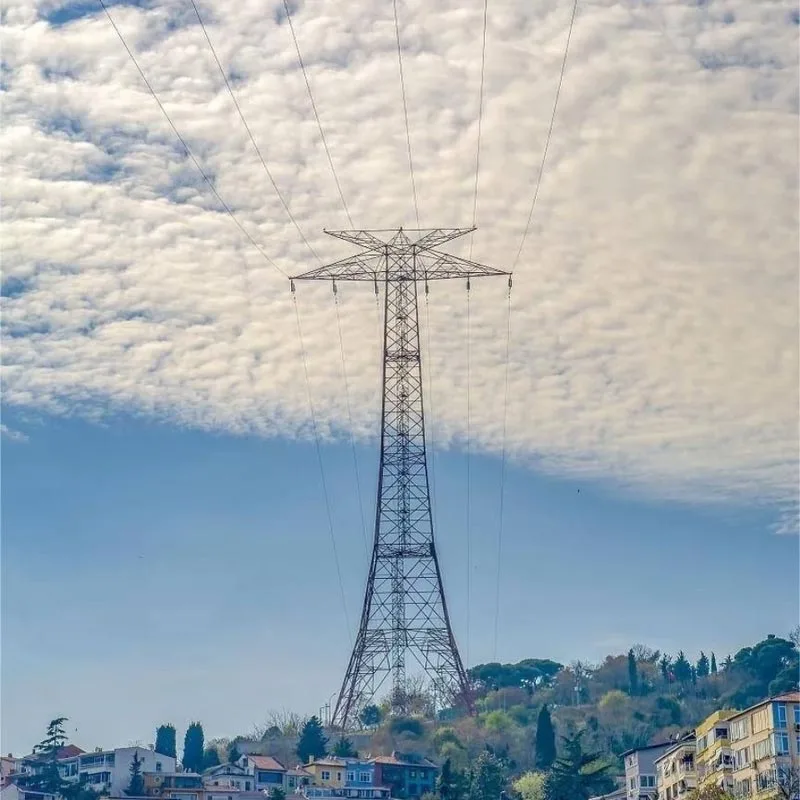
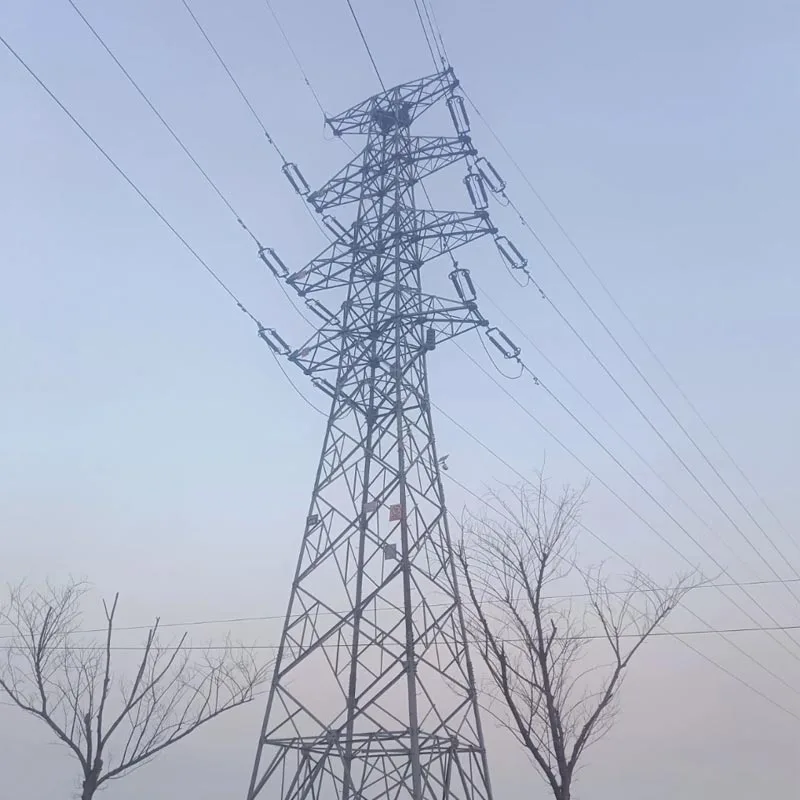
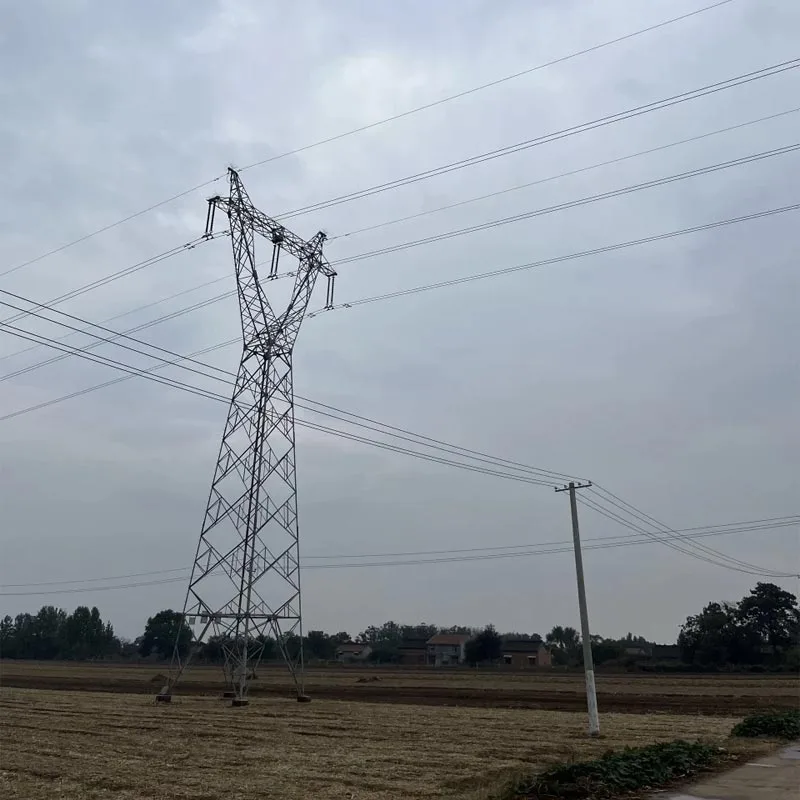
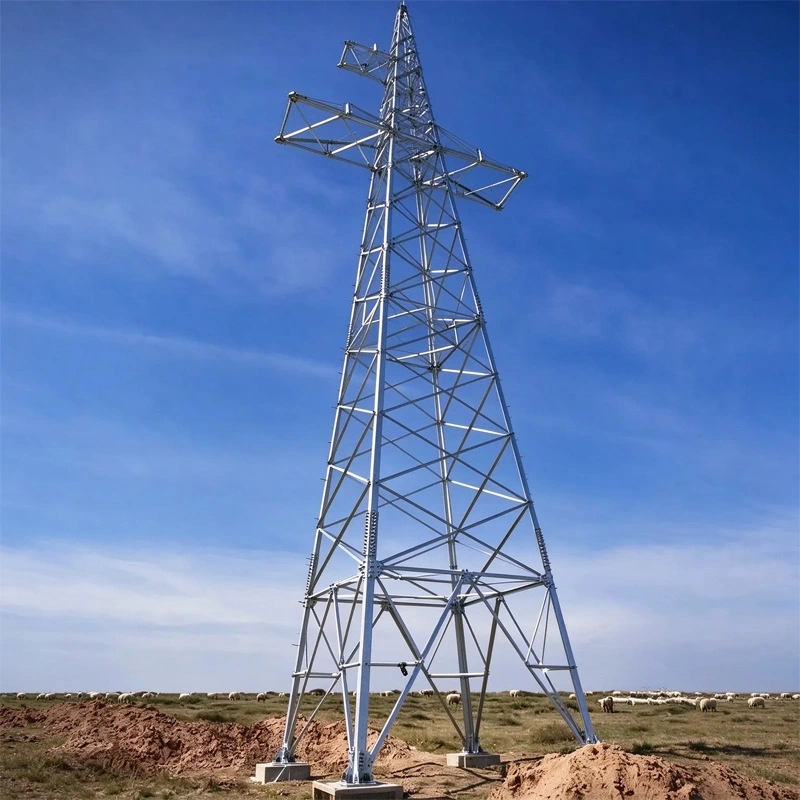
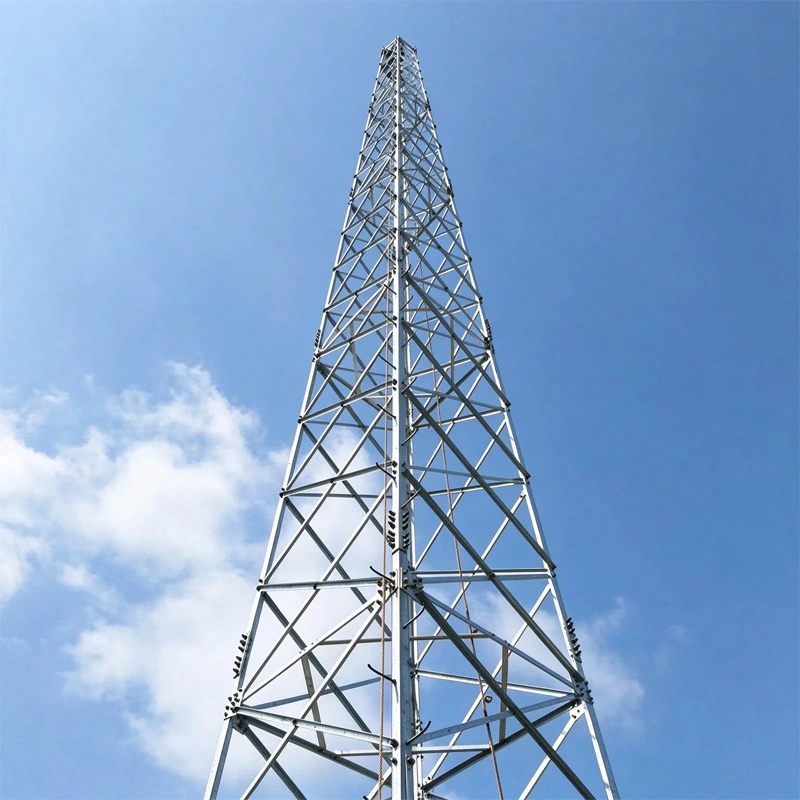
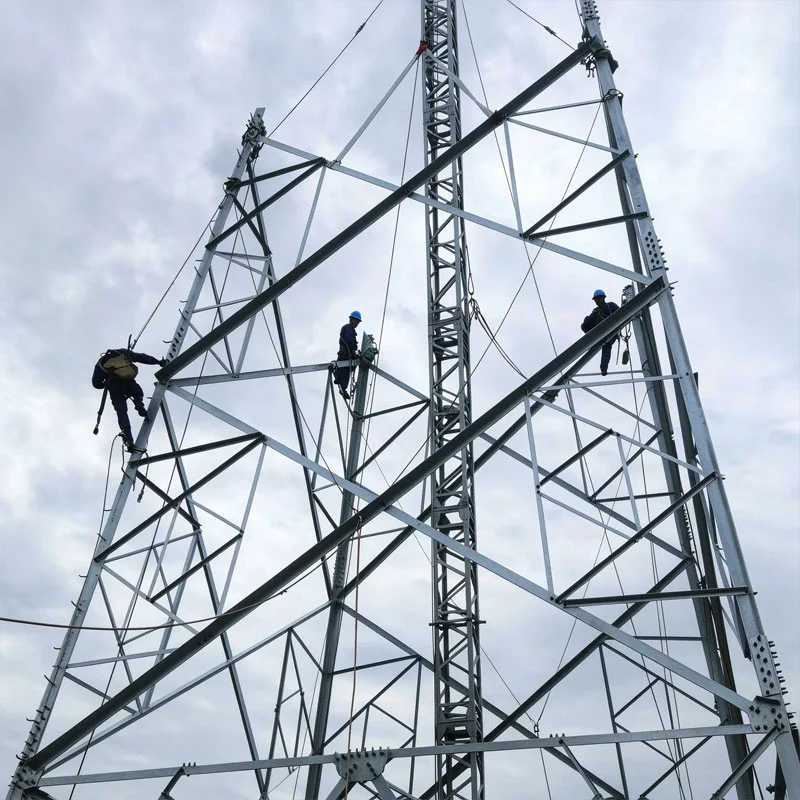
Self-Supporting Lattice Steel Tower
As a trusted China manufacture, Anbang New Energy delivers reliable self-supporting lattice steel tower solutions for power transmission and telecom infrastructure projects worldwide. With more than 10-year engineering experience, our in-house production facility handles ful-cycle work from structural calculation, CNC fabrication to hot-dip gavanizing anti-corosion processing. Unlike generic tower products, our self supporting lattice steel tower adopts bolt-connected truss framework without guy-wires, works stably under strong wind, heavy ice, coastal salt-spray and seismic conditions.
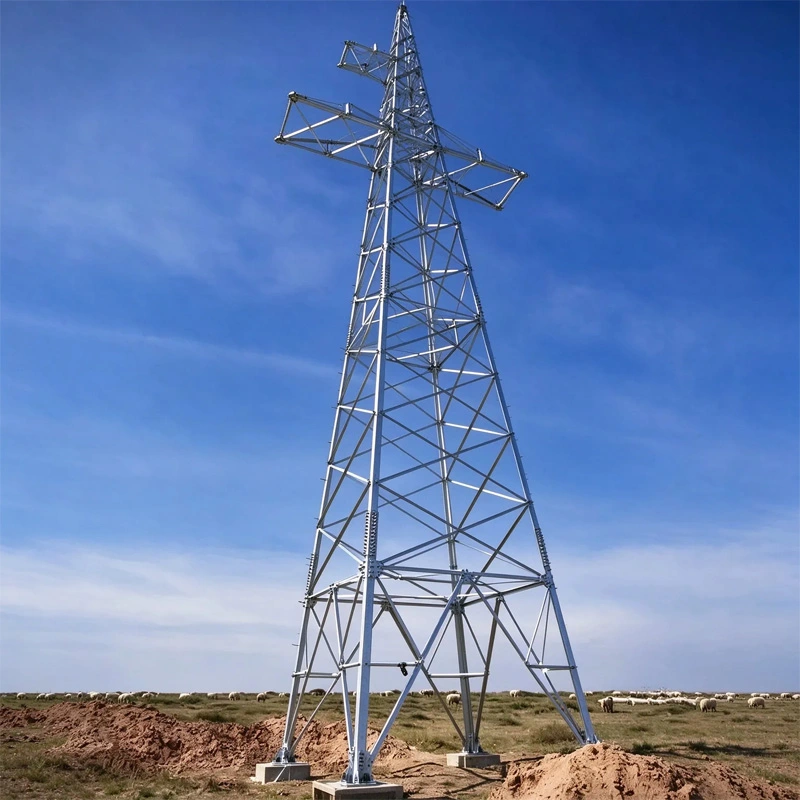
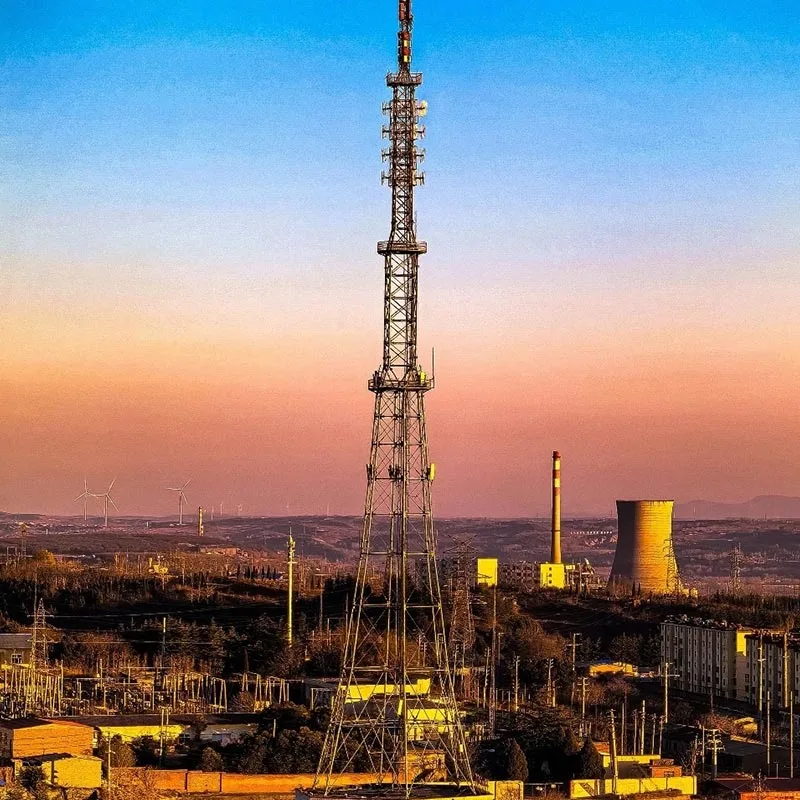
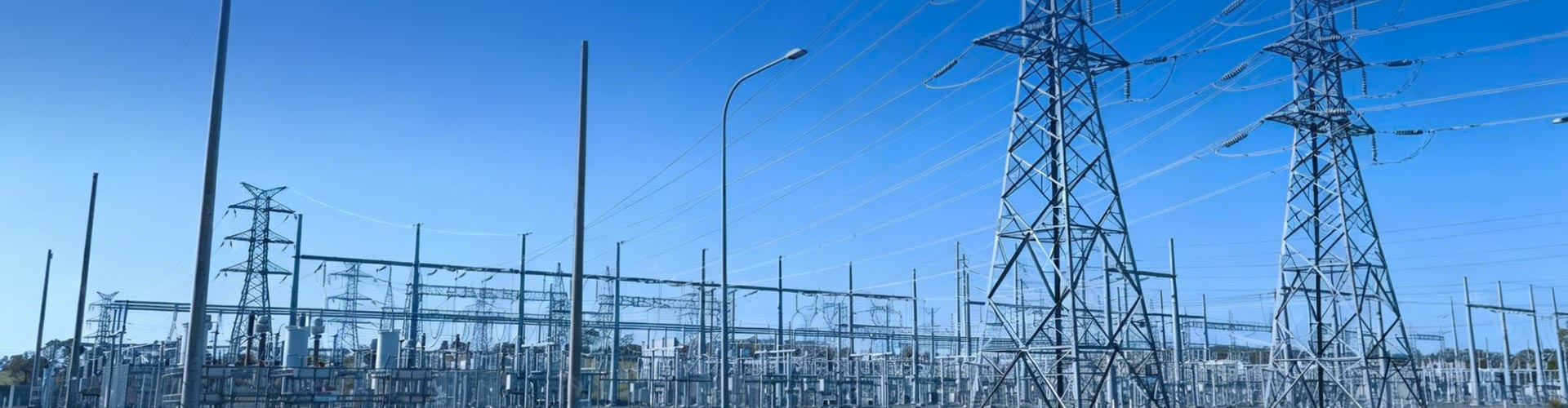
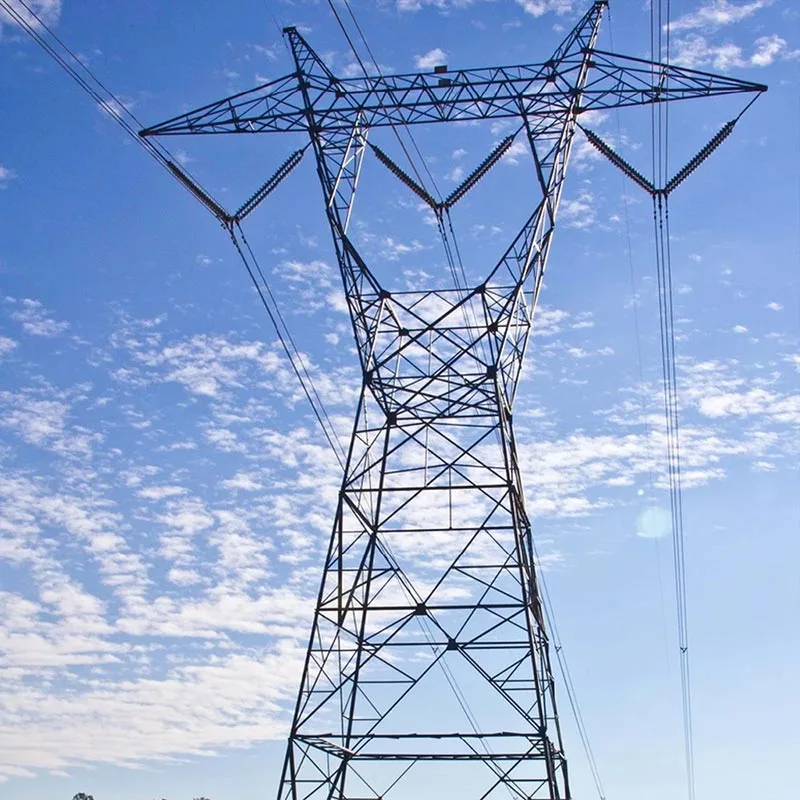
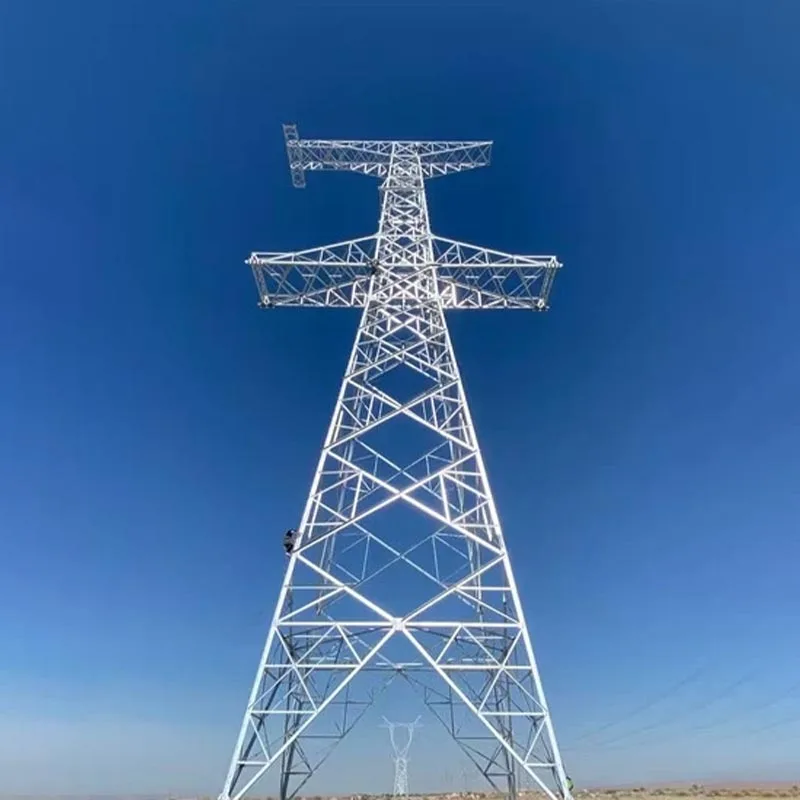
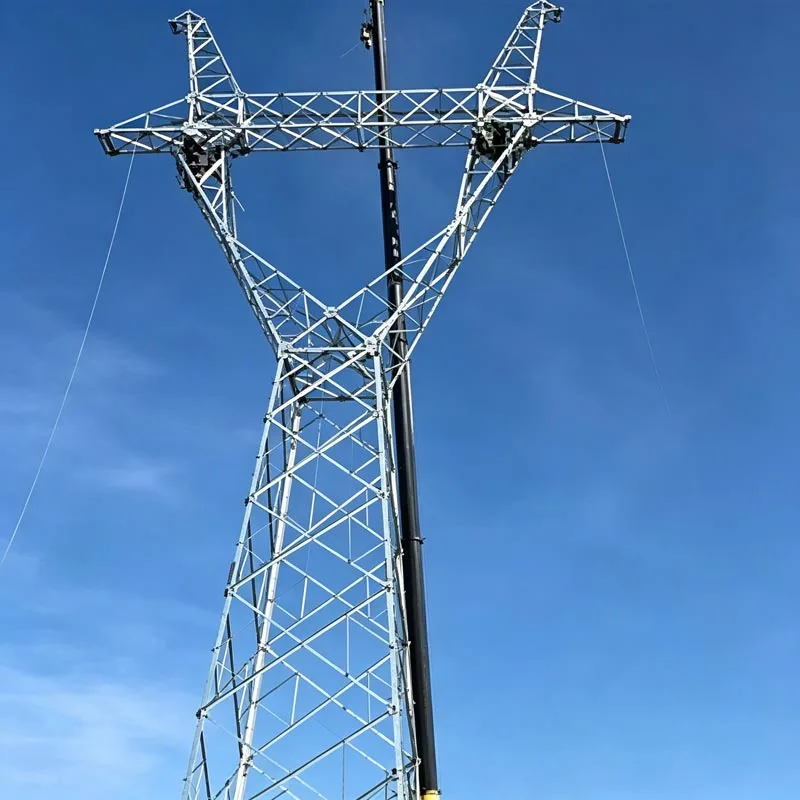
A self-supporting lattice steel tower is a four-legged, free-standing steel structure that carries transmission conductors or communication antennas without requiring guy wires or anchor cables. The "lattice" refers to the open truss construction—main legs, horizontal bracing, and diagonal members bolted together to form a rigid, wind-permeable frame. Unlike tubular poles, lattice towers handle higher loads with less steel weight, and unlike guyed masts, they need only a compact foundation footprint.
The self-supporting tower resists all wind and conductor loads through its structural geometry alone. No auxiliary cables, no stay wires, no additional right-of-way for anchors. This makes it the standard choice for urban corridors, mountainous terrain, and river crossings where space is limited.
Main Structural Components
A typical lattice transmission tower can include:
· Main tower legs
· Diagonal bracing members
· Horizontal cross members
· Cross arms
· Ground-wire or lightning-protection supports
· Connection plates and fastening components
· Base and foundation connection components
· Bolts, nuts, and other tower accessories
Each component is manufactured according to the approved engineering drawings. Hole positioning and dimensional accuracy are particularly important because incorrectly matched members can create installation problems and additional site work.
Manufacturing Process & Quality Control
| Stage | Process | QC Checkpoint |
| Material Incoming | Steel sections from qualified mills | Chemical composition, mechanical properties per heat number |
| CNC Cutting | Flame/plasma cutting to length | Dimensional tolerance ±2mm |
| Punching & Drilling | CNC drilling of bolt holes | Hole diameter, pitch, edge distance verification |
| Fabrication | Assembly of leg, bracing, and gusset plates | Fit-up inspection against shop drawings |
| Galvanizing | Hot-dip after fabrication, ≥610 g/㎡ | Coating thickness, adhesion, uniformity per ASTM A123 |
| Pre-Assembly | Trial erection of one face or full tower | Bolt-hole alignment, member straightness |
| Packing | Marked by tower type, section, and sequence | Bolt count verification per packing list |
Material Selection
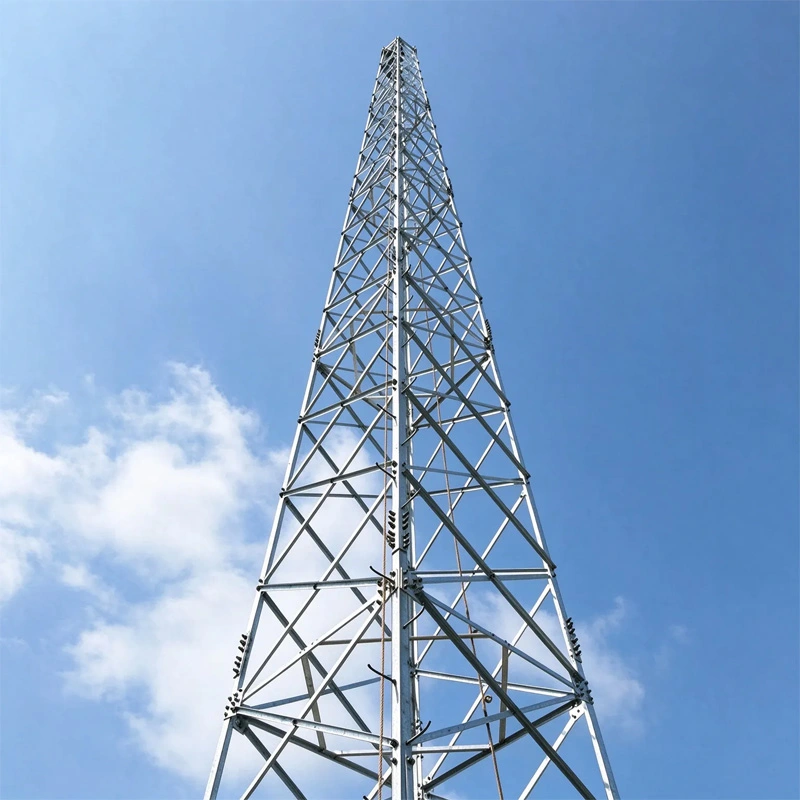
Anbang New Energy uses structural steel grades such as Q355B and Q420B according to project requirements. The appropriate grade and member dimensions can be selected according to calculated loads, tower height, span, environmental conditions, and transmission voltage.
High-strength steel can help achieve the required load-bearing performance without simply increasing the size and weight of every tower member. For large-span, heavy-ice, or high-wind applications, material selection becomes especially important because the tower must maintain sufficient structural capacity under combined loads.
Customer Case
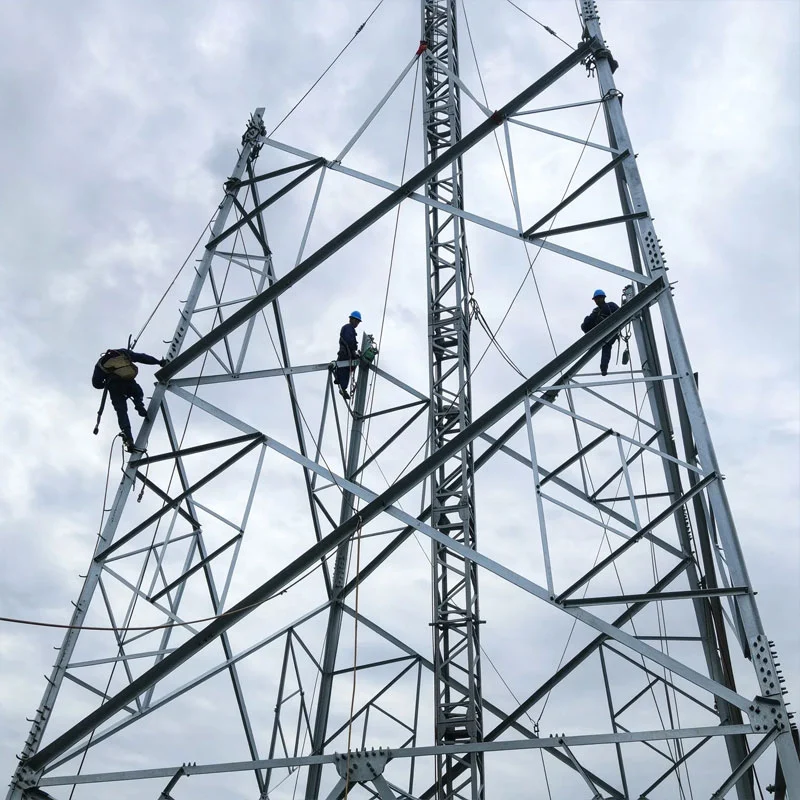
132kV Power Transmission Line Project in Southeast Asia
Brand: Anbang New Energy
Product: Self-Supporting Lattice Steel Tower
Client: Local Power EPC Contractor
Project: 132kV Power Transmission Line, Southeast Asia
A local power EPC contractor in Southeast Asia selected Anbang New Energy for a 132kV power transmission line project. The customer required self-supporting lattice steel towers with reliable structural performance, accurate component dimensions, and effective corrosion protection for humid outdoor conditions.
Anbang New Energy manufactured the towers according to the customer's technical requirements and approved drawings. The lattice structure was designed with main legs, diagonal braces, horizontal members, and cross arms to provide stable support for transmission conductors and ground wires. CNC cutting and drilling helped maintain accurate connection positions, while hot-dip galvanizing provided additional protection against moisture and atmospheric corrosion.
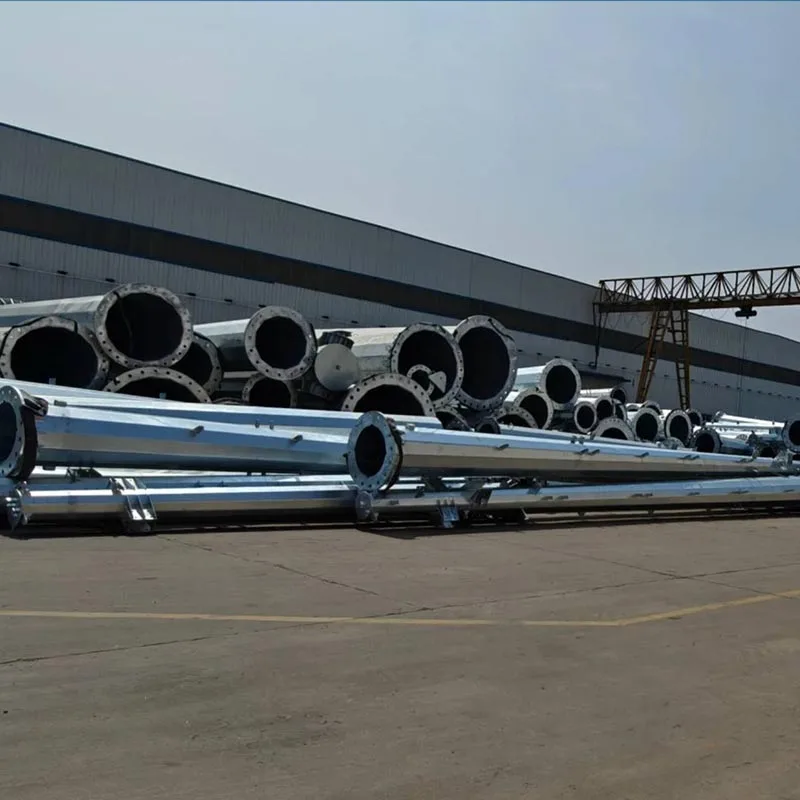
The tower components were inspected, organized, and prepared for transportation and on-site assembly. By combining steel fabrication, precision processing, galvanizing, and quality control, Anbang New Energy provided the EPC contractor with a coordinated tower supply solution for the 132kV transmission project.
Why Choose Anbang New Energy?
For an overseas customer, sourcing a transmission tower is not simply a matter of finding a steel fabricator. The supplier needs to understand structural requirements, manufacturing tolerances, galvanizing, documentation, packing, and international delivery.
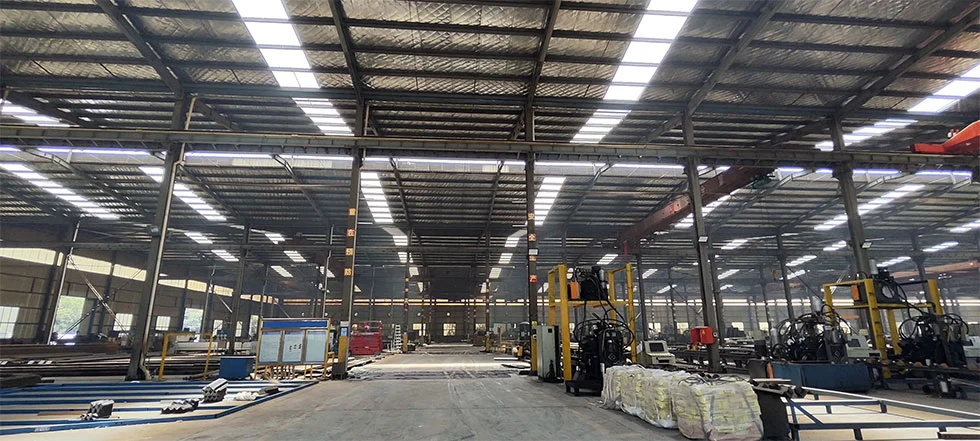
Anbang New Energy integrates design support, steel fabrication, CNC processing, galvanizing, inspection, packaging, and delivery coordination. Its 150,000㎡ production base and engineering team support customized transmission structures, while its location in Qingdao provides access to international logistics through Qingdao Port and the regional transportation network.
Our Certificates
All certificates cover our production scope of transmission line towers, angle steel towers, steel pipe towers, communication towers and related steel structural components.
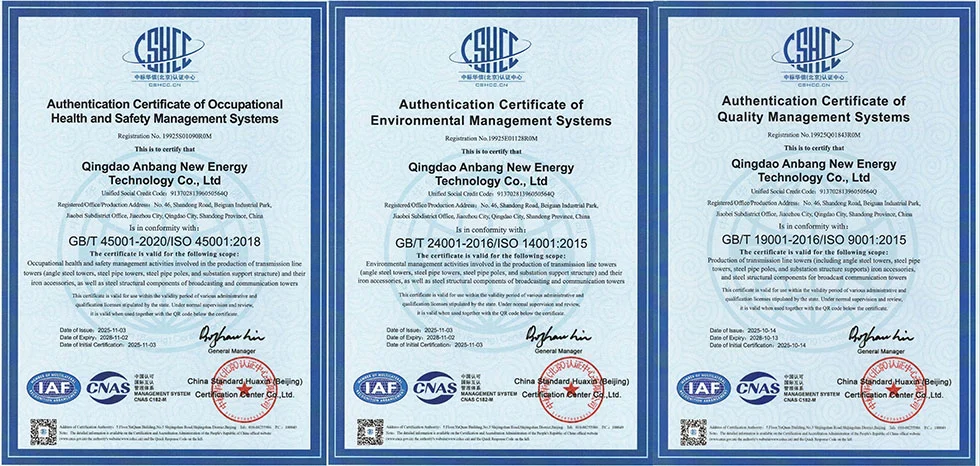
Anbang New Energy has obtained ISO9001 Quality Management System, ISO14001 Environmental Management System, ISO45001 Occupational Health and Safety Management System, and ISO50001 Energy Management System certifications.
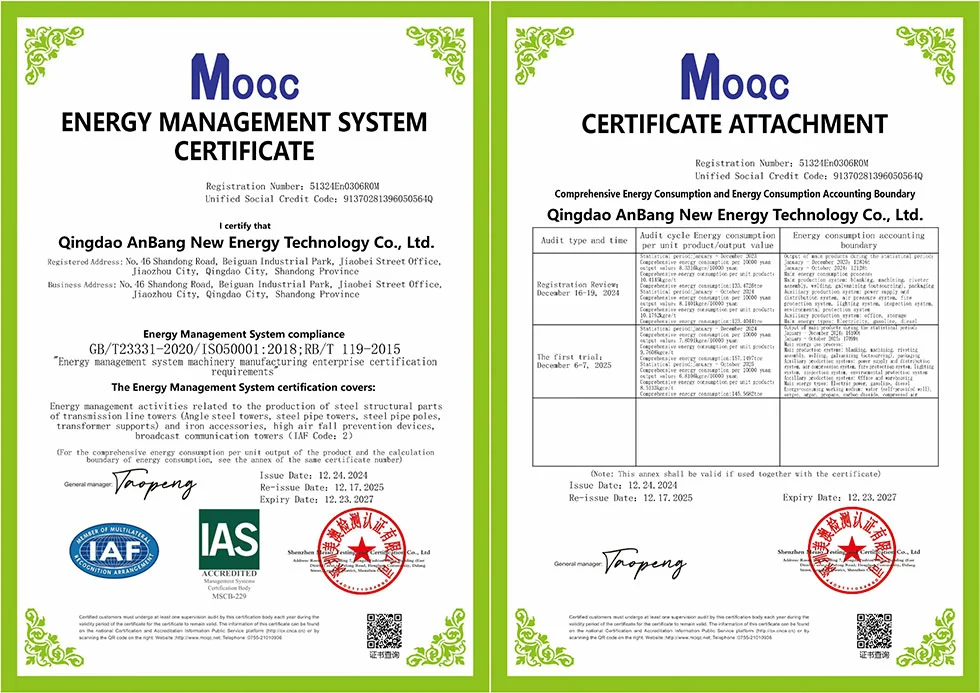
These ISO certificates, endorsed by CNAS and IAF accreditation, verify that our factory strictly controls product quality, production environment, workplace safety and energy consumption during the whole fabrication process. It proves our stable standardized manufacturing capacity for self-supporting lattice steel towers and gives reliable quality assurance for global buyers.
FAQ
Q1: Can the self-supporting lattice steel tower be designed for my specific wind zone?
A: Yes. We design to ASCE 7 or your national wind code. Provide the basic wind speed, exposure category, and ice thickness, and we will calculate the member forces accordingly.
Q2: How are the legs connected on site?
A: All connections are single-leg bolted with grade 8.8 bolts. The tower ships with all bolts, nuts, and washers packed per section, and the erection drawing shows the bolt sequence. No site welding is required for the main structure .
Q3: What is the lead time for a custom tower design?
A: For a new tower type: 25–35 days from approved drawings to shipment. For repeat orders of an existing design: 15–20 days, depending on galvanizing schedule.
Q4: Do you provide the foundation design?
A: No—foundation design depends on local soil conditions and must be performed by a licensed civil/structural engineer in your jurisdiction. We provide the leg reaction loads (compression, uplift, shear) that your engineer needs for foundation sizing.
Q5: How is the self-supporting lattice steel tower packed for shipping?
A: Members are bundled by tower section and marked with erection sequence numbers. Bolt kits are packed separately by section. We provide a loading plan that optimizes container space and a packing list that matches the erection drawing.
Send Inquiry
Contact Info
-
Address
No. 46 Shandong Road, Beiguan Industrial Park, Jiaobei Subdistrict, Jiaozhou City, Qingdao, Shandong Province, China
-
Tel
-
Email
Anbang is a professional manufacturer and supplier in China. Our factory provides steel pipe tower, signal tower, single arm traffic pole, etc. If you are interested in our products, you can inquire now, and we will get back to you promptly.
Related Products
News Recommendations