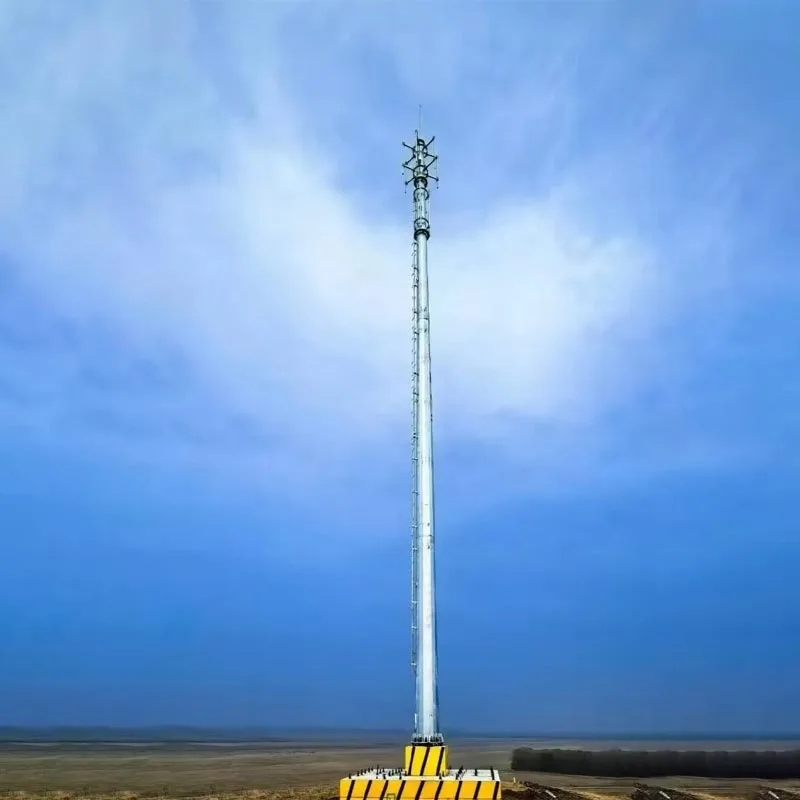
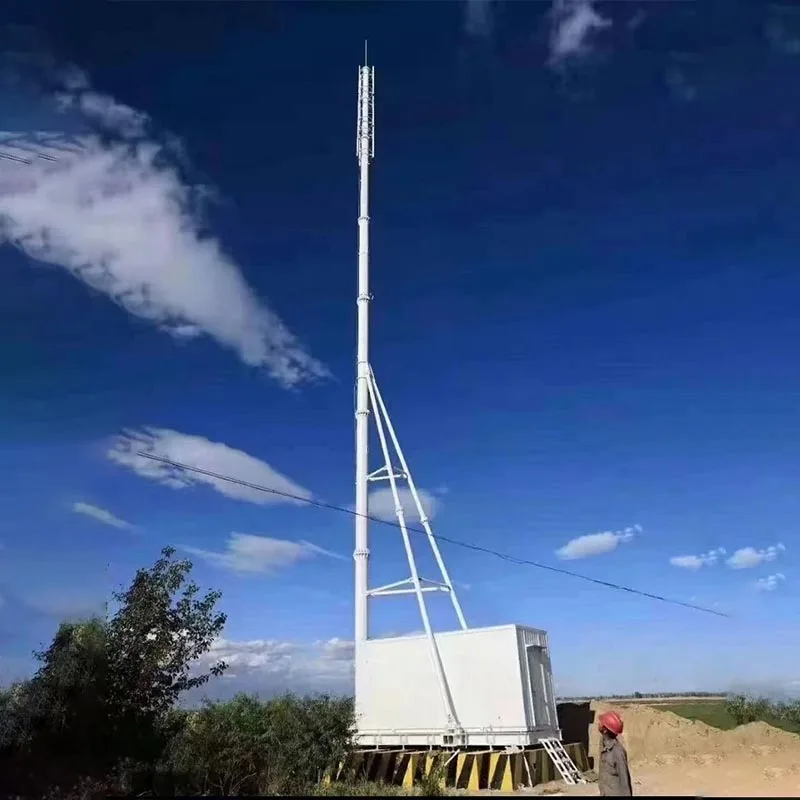
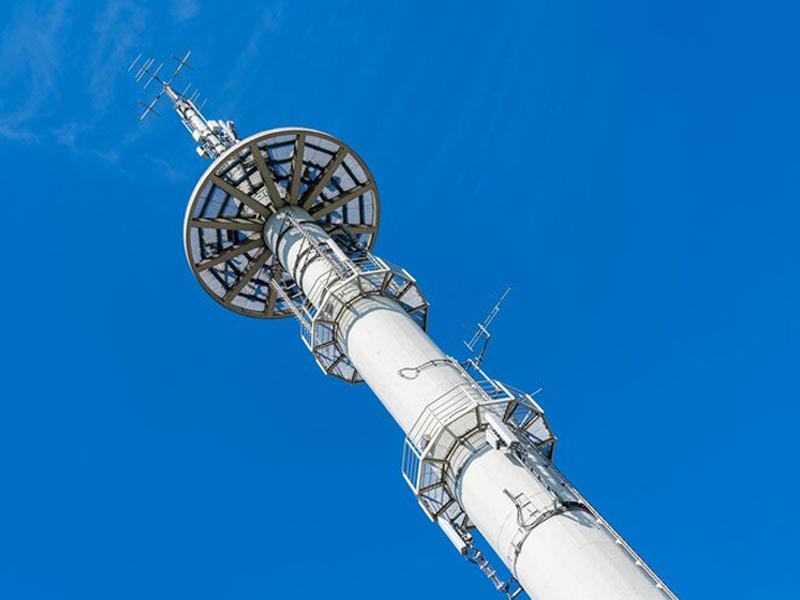
Communication steel pipe tower is a communication tower that uses steel pipe as the main structural material. It belongs to the key infrastructure supporting wireless communication antennas. Its typical representative is the three pipe tower, which has the characteristics of structural stability, strong wind resistance, and small footprint. It is widely used in fields such as mobile communication and broadcasting television.
Definition and core structural characteristics
1. Basic definition and function: Communication steel pipe tower is a main type of communication iron tower, whose main structure is made of steel pipe components. Its core function is to provide support for antennas of wireless communication systems such as mobile communication, broadcasting and television, microwave transmission, etc., and to set them up to the required height to expand the signal coverage range.
2. Typical structural forms: Common steel tube tower structures include three tube towers, four tube towers, etc. Among them, the three tube tower is a highly representative steel pipe tower type, with a cross section of a regular triangle. It is composed of three main steel pipes (main materials) as the skeleton, connected by auxiliary components such as horizontal bars and diagonal bars to form a stable truss structure. The entire tower is usually composed of multiple standard tower sections connected by flanges and bolts, making it easy to transport and assemble on site.
Technical parameters and industry standards
1. Key performance parameters: The design of communication steel pipe towers must meet strict engineering requirements, and the main technical parameters include:
-Structural load: The design wind speed is usually 30-35 meters per second, the seismic fortification intensity can reach 8 degrees, and it can withstand a certain thickness of ice load.
-Physical specifications: The common height range is between 10 meters and 50 meters, and can be customized according to needs. The verticality requirement of the tower body is high, usually controlled at no more than 1/1000.
-Environmental adaptability: Suitable for a wide temperature range, such as -45 ℃ to+50 ℃, to adapt to different climatic conditions.
-Corrosion prevention and service life: The surface is generally treated with hot-dip galvanizing technology for corrosion prevention, and the designed service life can reach more than 30 years.
2. Design specifications to be followed: Its design, manufacturing, and acceptance must comply with relevant national steel structure design specifications and tower and mast design regulations to ensure structural safety and reliability. For special steel tube towers such as single tube towers, there are more specific technical regulations, such as the "Technical Regulations for Steel Structure Single Tube Communication Towers", which provide detailed provisions on their design reference period, safety level, structural analysis, etc.
Application scenarios and comprehensive advantages
1. Main application areas: Communication steel pipe towers (especially three pipe towers) are mainly used in areas with relatively low landscape requirements but strong load capacity and economy, such as suburbs, county towns, townships, rural areas, etc., due to their comprehensive performance, to achieve large-scale signal coverage.
2. Core Advantage Analysis: Compared to other tower types, steel tube towers (taking three tube towers as an example) have multiple advantages:
-Excellent structural performance: Steel pipes have a low wind load coefficient and strong wind resistance; Triangular or quadrilateral cross-sectional layout has good stability.
-Good economic efficiency: small root opening (distance between tower feet), small footprint, and conservation of land resources; The number of components is relatively small compared to angle steel towers, which saves steel usage and reduces transportation and installation costs.
-Convenient construction and maintenance: using flange bolt connection, fast installation speed, short construction period; The number of rods is relatively small, making maintenance and inspection relatively convenient in the later stage.
3. Key points of installation and maintenance: The installation process mainly includes foundation construction, tower section lifting, bolt tightening, and anti-corrosion inspection, ensuring compliance with design drawings and specifications. Daily maintenance focuses on regularly checking the fastening status of connecting bolts, whether the tower structure is deformed, whether the anti-corrosion galvanized layer is intact, and whether the lightning protection grounding system is effective, in order to ensure the safety and stability of long-term use.
We use cookies to offer you a better browsing experience, analyze site traffic and personalize content. By using this site, you agree to our use of cookies. Privacy Policy